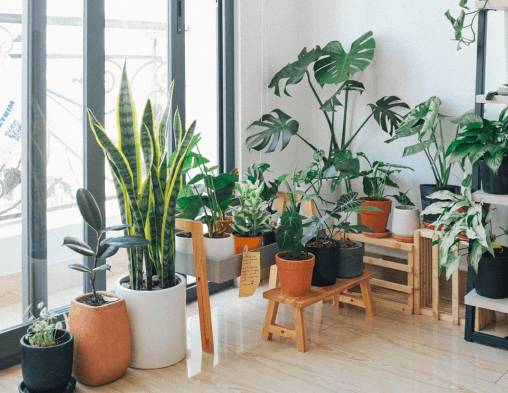
Indoor plants are a great way to add some greenery and freshness to your home or office. They can also provide many benefits for your health and well-being, such as improving air quality, reducing stress, and boosting mood. In this blog post, I will introduce you to some of the most popular and easy-to-care-for indoor plants, and give you some tips on how to choose and maintain them.
Some of the most common indoor plants are:
Fiddle leaf fig (Ficus Lyrata): This plant has large, glossy leaves that make a statement in any room. It needs bright, indirect light and regular watering. It can grow up to 10 feet tall indoors, so make sure you have enough space for it.
Chlorophytum comosum
Spider plant (Chlorophytum comosum): This plant is very adaptable and low-maintenance. It produces long, arching leaves and small plantlets that hang from the stems. It can tolerate low to bright light and occasional watering. It is also known to purify the air by removing toxins
Spathiphyllum
Peace lily (Spathiphyllum): This plant has elegant white flowers that contrast with its dark green leaves. It prefers low to moderate light and moist soil. It can also filter out harmful chemicals from the air, such as formaldehyde and benzene
Air plant (Tillandsia): This plant does not need any soil to grow, as it absorbs water and nutrients from the air. It has thin, spiky leaves that come in various shapes and colors. It needs bright light and weekly misting or soaking. It can also produce colorful flowers when it blooms
Air plant (Tillandsia): This plant does not need any soil to grow, as it absorbs water and nutrients from the air. It has thin, spiky leaves that come in various shapes and colors. It needs bright light and weekly misting or soaking. It can also produce colorful flowers when it blooms
Aloe vera
Aloe vera (Aloe barbadensis): This plant has thick, fleshy leaves that store water and gel. It needs bright light and occasional watering. It can also be used for its medicinal and cosmetic properties, such as soothing burns, cuts, and skin irritations.
To choose the best indoor plant for your space, you should consider the following factors:
Light: Different plants have different light requirements, ranging from low to high. You should match the plant to the light level of your location, such as a window, a shelf, or a corner. You can also use artificial lighting to supplement natural light if needed
Water: Different plants have different water needs, ranging from dry to moist. You should check the soil moisture of your plant regularly and water it accordingly. You should also use water that is at room temperature and free of chlorine and fluoride
Humidity
Humidity: Different plants have different humidity preferences, ranging from dry to humid. You should monitor the humidity level of your environment and adjust it if necessary. You can use a humidifier, a pebble tray, or a spray bottle to increase humidity.
Fertilizer
Fertilizer: Different plants have different fertilizer needs, ranging from low to high. You should feed your plant with a balanced fertilizer that is suitable for its type and growth stage. You should also follow the instructions on the label and avoid over-fertilizing.
To maintain your indoor plant, you should follow these general tips:
Prune
Prune: You should trim any dead, damaged, or diseased leaves and stems from your plant to keep it healthy and tidy. You should also remove any faded flowers to encourage new blooms. You should use clean and sharp tools to avoid infection and injury
Repot: You should repot your plant when it outgrows its current pot or when the soil becomes compacted or depleted. You should choose a new pot that is slightly larger than the old one and has drainage holes. You should also use fresh and well-draining potting mix that is appropriate for your plant.
Pest and disease control: You should inspect your plant regularly for any signs of pests or diseases, such as insects, mites, fungus, or mold. You should use natural or organic methods to treat them, such as neem oil, soap spray, or rubbing alcohol. You should also isolate the affected plant from other plants to prevent spreading
Indoor plants are not only beautiful, but also beneficial for your home and health. By choosing the right plant and taking good care of it, you can enjoy its presence and perks for a long time.
I hope this blog post has given you some useful information and inspiration for your indoor gardening journey. Happy planting!

Contact Info
- Address: Love gardens LLC , nursery warsan 3, Dubai
- Phone: +971 554899462
- Email: [email protected]