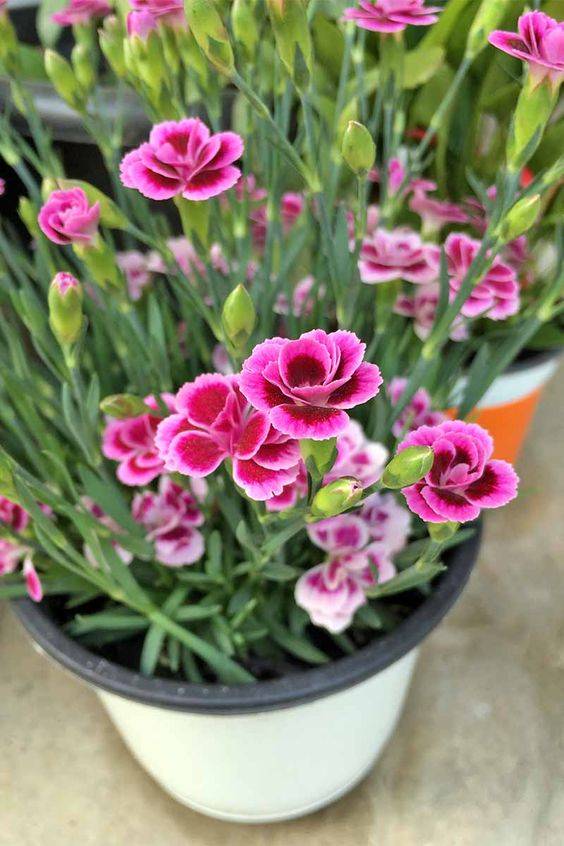
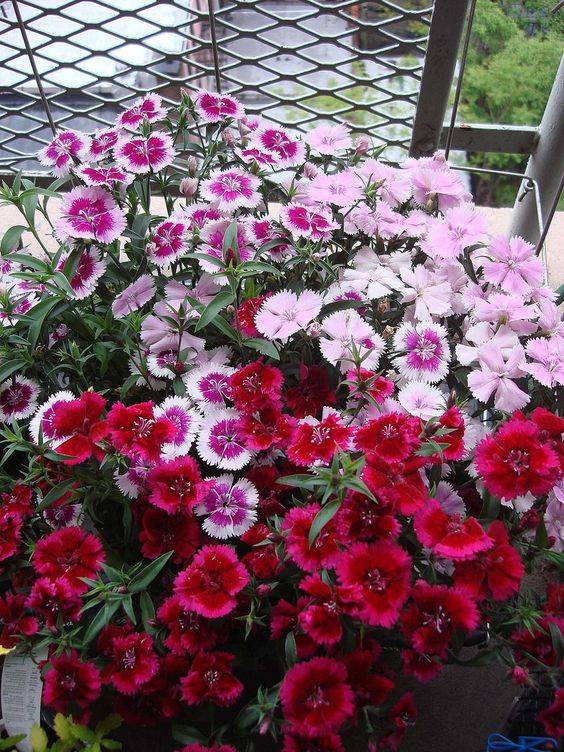
Dianthus Caryophyllus Mix Colour (Hanging)




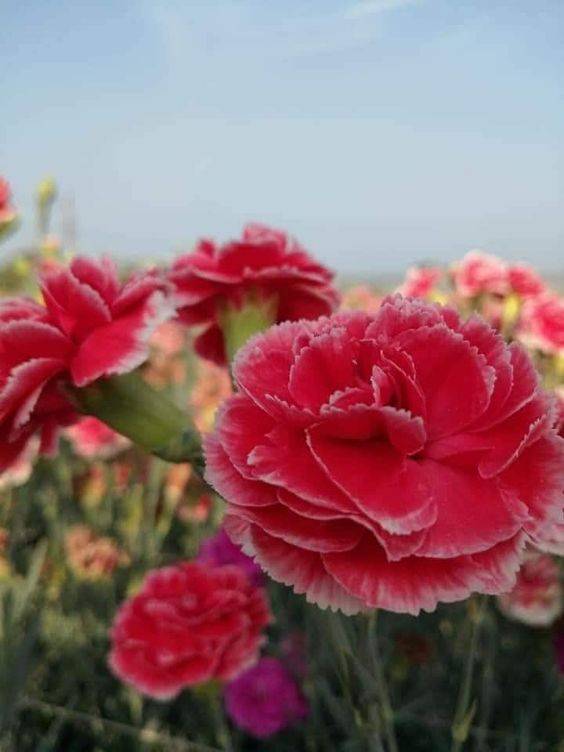
Dianthus caryophyllus, commonly known as the carnation or clove pink, is a species of Dianthus native to the Mediterranean region. The plant is a herbaceous perennial that grows up to 80 cm (31 + 1 ⁄ 2 in) tall. The leaves are slender, greyish-green to blue-green, and up to 6 inches (15 cm) long. The flowers are up to 2 inches (5 cm) in diameter, sweetly scented, and produced singly or up to five together in a cyme. Carnations are prized for their vibrant colors, delicate fringed petals, and enchanting fragrance. The scent of carnations is often described as spicy, clove-like, or reminiscent of a combination of cinnamon and nutmeg. Carnations have cultural significance and are associated with love, distinction, and motherly affection. With numerous cultivars and hybrids, carnations offer a wide variety of colors and forms, making them popular for gardens, floral arrangements, and scented products.
Planting: Dianthus Caryophyllus prefers well-draining soil and full sun. Plant young Dianthus Caryophyllus about one foot apart, allowing them to spread properly. Their preference for well-drained soil makes them a natural choice for a rock garden. Plant them in mid- or late spring when the soil has warmed. They’ll bloom about 12 weeks after planting from seed. When grown in zones 9 to 11, they may perform as perennials, blooming through fall and winter and into spring. The flowers can bounce back from light frosts.
Watering: Dianthus Caryophyllus requires regular watering throughout the growing season (spring to fall). They need at least an inch or two of water every seven to ten days. If the rain doesn’t provide it, you should.
Fertilizing: To stay healthy during the months-long blooming marathon, Dianthus Caryophyllus need a dose of diluted liquid fertilizer, provided once every month or so while they’re flowering. Select a balanced product (10-10-10 NPK).
Pruning: Prune Dianthus Caryophyllus regularly to encourage bushy growth and more flowers. Deadheading spent blooms is also important to keep the plant looking tidy and to encourage more blooms.
Propagation: Dianthus Caryophyllus can be propagated by stem cuttings taken in late summer or early fall. Trim off a healthy portion of stem that’s around 6 inches long. Opt for a green, supple stem over one that’s older and… Remove foliage from the bottom half of the stem. Dip the cut end in rooting hormone. Plant the stem in a small container filled with moistened soilless potting mix.
Here are some step-by-step instructions for taking care of Dianthus Caryophyllus:
Review
Related products
















































































Contact Info
- Address: Love gardens LLC , nursery warsan 3, Dubai
- Phone: +971 554899462
- Email: [email protected]