Spathodea campanulata




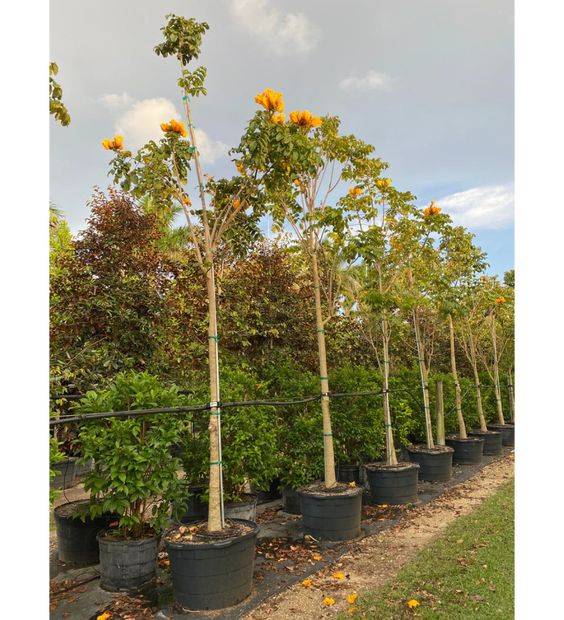
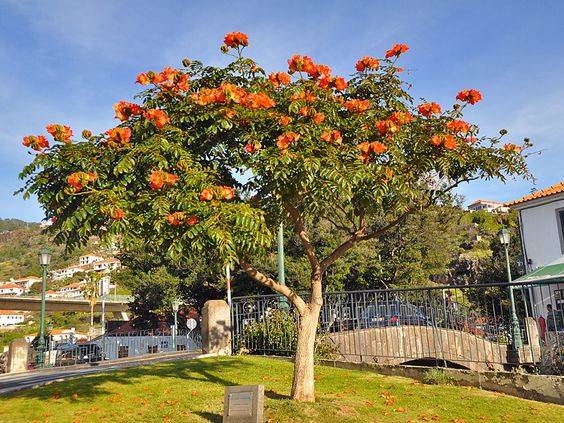
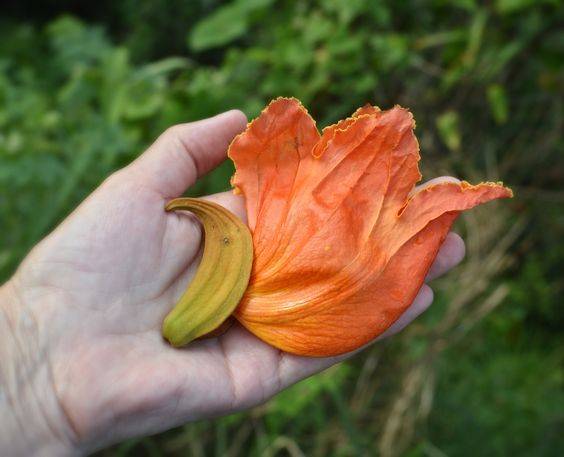
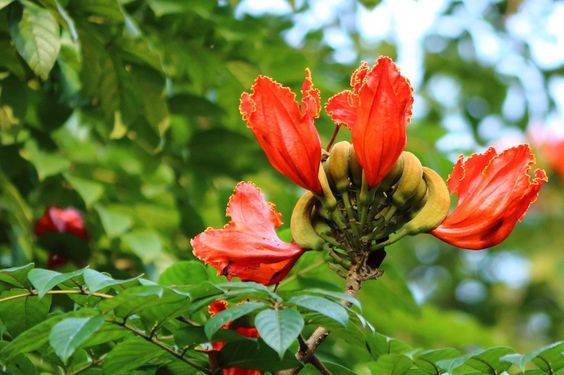
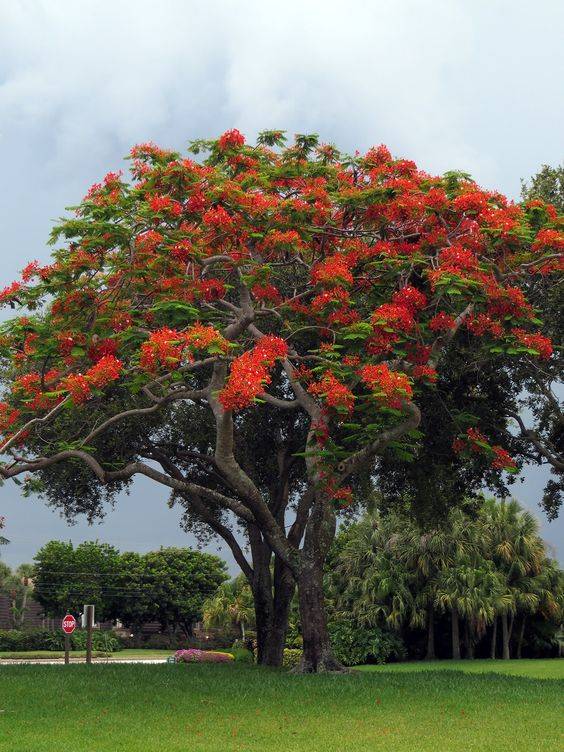
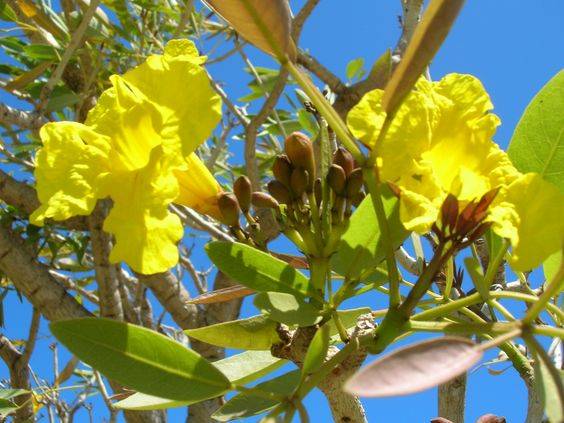
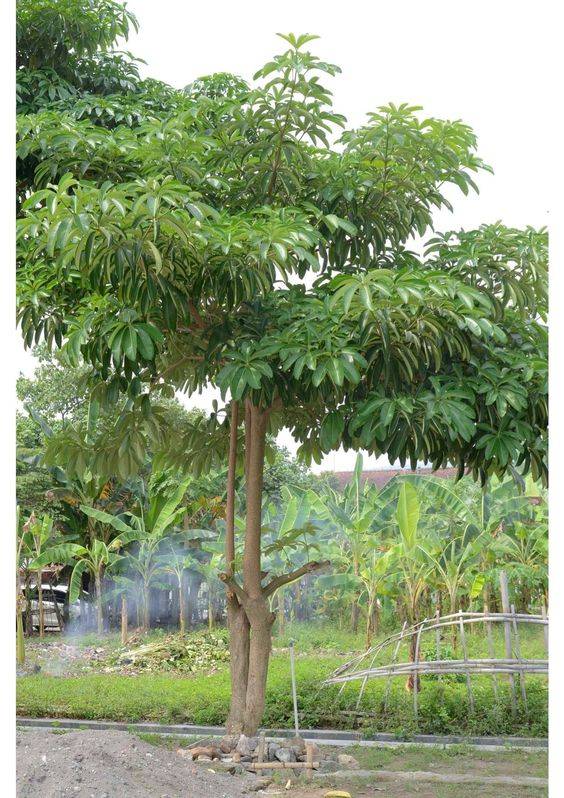
Spathodea campanulata, commonly known as the African tulip tree, is a species of flowering plant in the family Bignoniaceae. It is native to tropical dry forests of Africa and grows between 7–25 m (23–82 ft) tall. The tree has been nominated as among 100 of the “World’s Worst” invaders. The flower bud of Spathodea campanulata is ampule-shaped and contains water. People sometimes play with these buds because of their ability to squirt water. The sap sometimes stains yellow on fingers and clothes. The open flowers are cup-shaped and hold rain and dew, making them attractive to many species of birds. The African tulip tree flower produces large flamboyant reddish-orange flowers that have approximately five petals and are 8-15 cm long. The flowers are bisexual and zygomorphic. These are displayed in a terminal corymb-like raceme inflorescence. Its pedicel is approximately 6 cm long. This flower also has a yellow margin and throat. The pistil can be found at center of four stamens that is inserted on the corolla tube. This flower has a slender ovary that is superior and is two celled. The seeds of this tree are flat, thin, and broadly winged.
Watering: African tulip tree prefers moderately moist soil and regular watering to mimic its natural habitat in tropical rainforests. To prevent root rot, ensure well-draining soil and avoid overwatering. During drier seasons, monitor the soil closely and adjust the watering accordingly.
Lighting: African tulip tree thrives under intense sun exposure throughout the day, while also enduring moderate illumination. Its origin environment is equatorial forest canopy, implying it benefits from long hours of sun. Excessive, intense light might burn the leaves, while too little can hinder its growth and flowering.
Temperature: The African tulip tree requires a warm environment, with native growth environments being tropical and subtropical regions. Its preferred temperature range falls between 68 to 105℉ (20 to 41℃). During the summer, it’s important to keep the temperature consistent, with minimal fluctuations. During cooler months, adjust temperature to 50 to 68℉ (10 to 20℃) to promote optimal growth.
Fertilization: A monthly application of diluted all-purpose liquid fertilizer will encourage healthy growth and blooming.
Pruning: Carefully prune older, new growth for propagation. Coating the cutting in rooting hormone will help establish the new plant.
Transplanting: The best time to transplant African tulip tree is from early spring through late summer, as it promotes better rooting and ensures robust growth. Make sure to choose a sunny, well-drained location and provide supplemental watering if needed for successful transplanting.
Here are some step-by-step instructions for caring for your Spathodea campanulata:
Review
Related products























Contact Info
- Address: Love gardens LLC , nursery warsan 3, Dubai
- Phone: +971 554899462
- Email: [email protected]