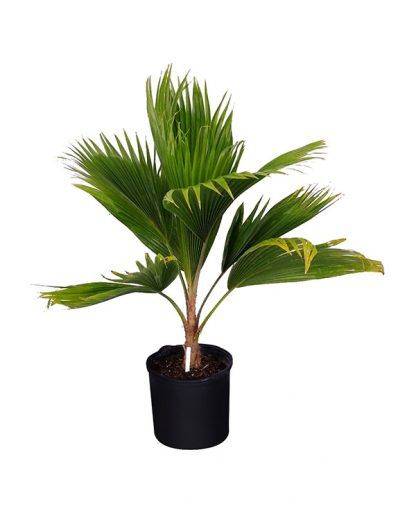
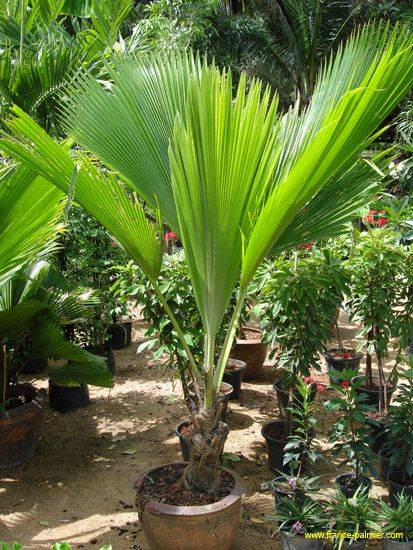
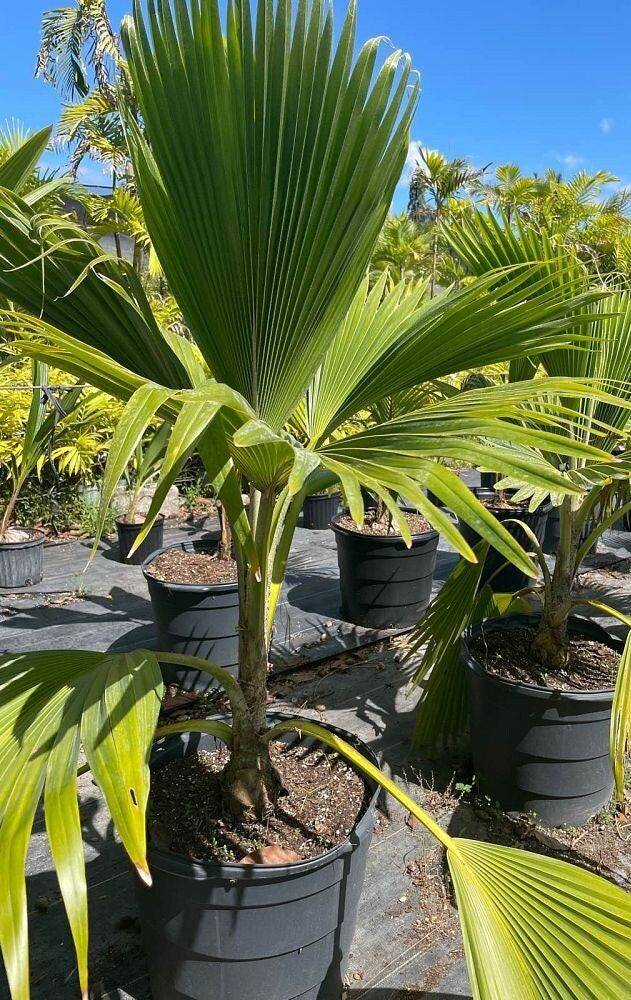
Pritchardia pacifica
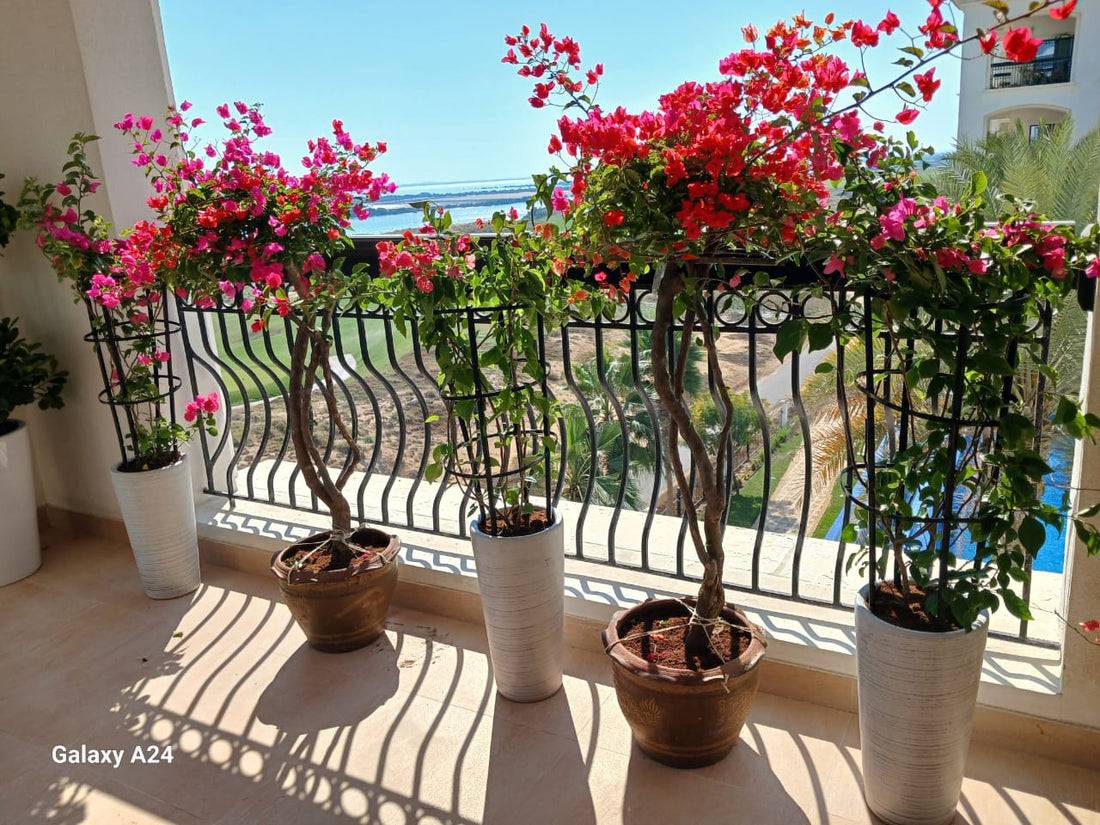
Pritchardia pacifica, also known as the Fiji fan palm or piu, is a species of palm tree that is native to Tonga and Fiji. It is a solitary palm that can grow up to 15 meters in height with a smooth, grayish-tan trunk that is 25 cm in diameter.
- Uses: Pritchardia pacifica is used as an ornamental plant in gardens and parks, as well as being used for its timber and for medicinal purposes.
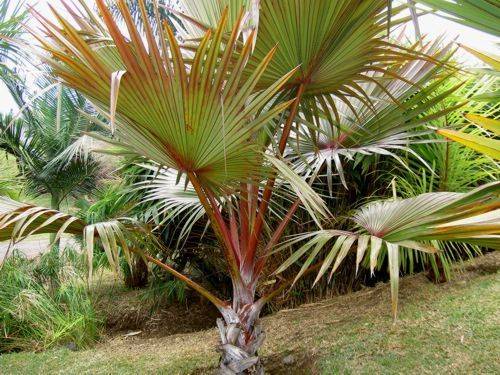
- Properties: Pritchardia pacifica has large, nearly round, flat fan leaves held in the crown. The leaves are divided into many stiff-tipped segments. The inflorescences are composed of 1-4 panicles, shorter than or equalling the petioles in length. The panicles are branched to 2 orders, with glabrous rachillae. The flowers are followed by small, shiny dark brown to purplish black, spherical fruits, 0.4 inches (1.0 cm) in diameter.
- Growth: Pritchardia pacifica grows best in tropical dry forests and requires high light environments with moist but well-drained soil. It tolerates coastal spray and has average water requirements.
- Propagation: Pritchardia pacifica can be propagated by seed or by division of the suckers. Seeds should be sown in a well-drained soil mix and kept moist until germination. Division of the suckers should be done in spring or early summer. The suckers should be planted in a well-drained soil mix and kept moist until established.
- Light: Pritchardia pacifica prefers high light environments with filtered sunlight.
- Water: Pritchardia pacifica has average water requirements and prefers to grow in well-drained soil. Water the plant when the top inch of soil feels dry to the touch.
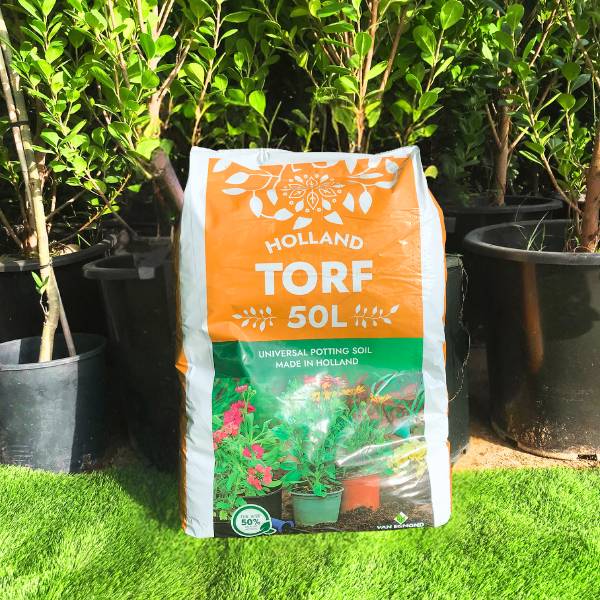
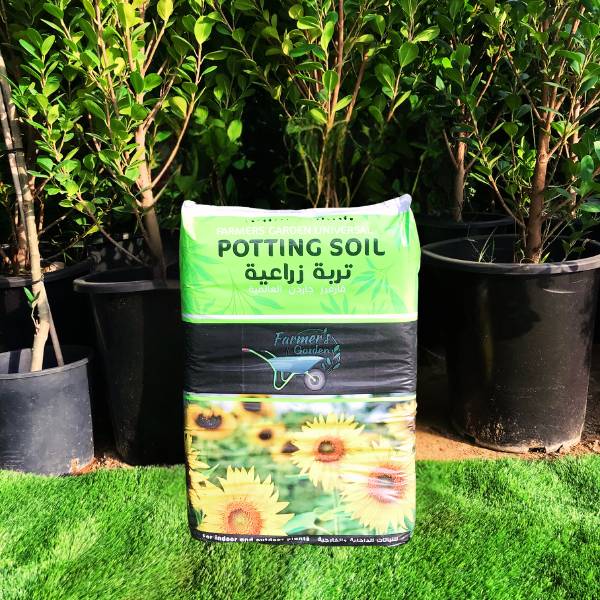
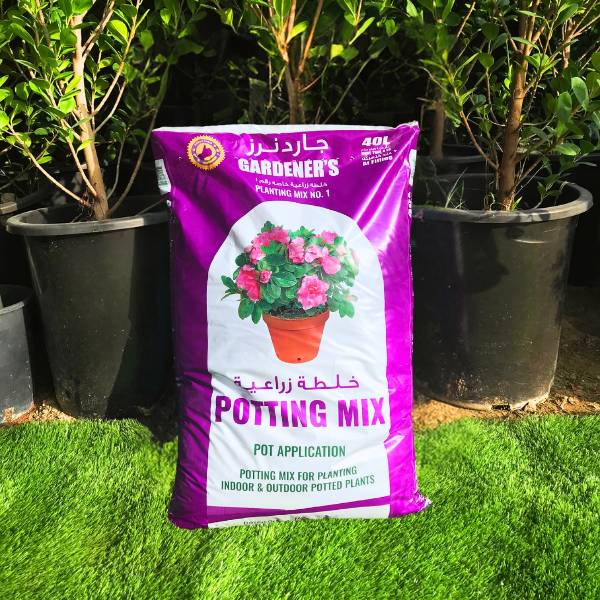
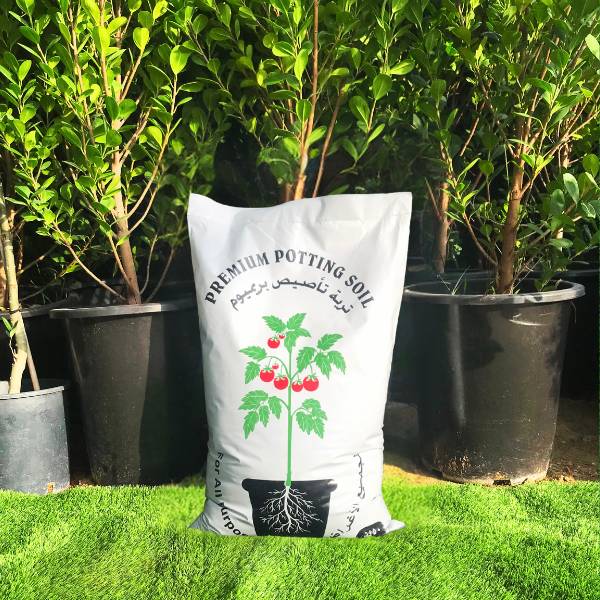
- Soil: Pritchardia pacifica prefers to grow in well-drained soil with good aeration. Use a potting mix that contains peat moss, perlite, and vermiculite for best results.
Here are some facts about Pritchardia pacifica: Here are some tips for caring for Pritchardia pacifica:
Review
Related products














Contact Info
- Address: Love gardens LLC , nursery warsan 3, Dubai
- Phone: +971 554899462
- Email: [email protected]