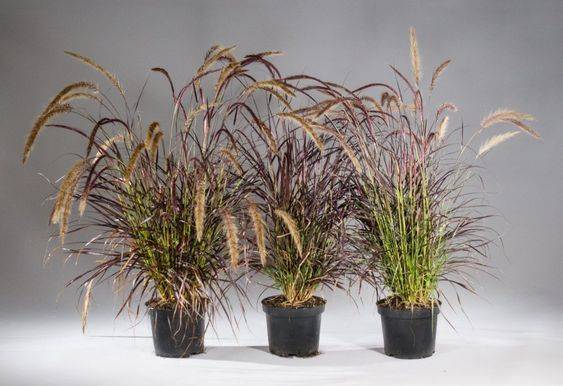
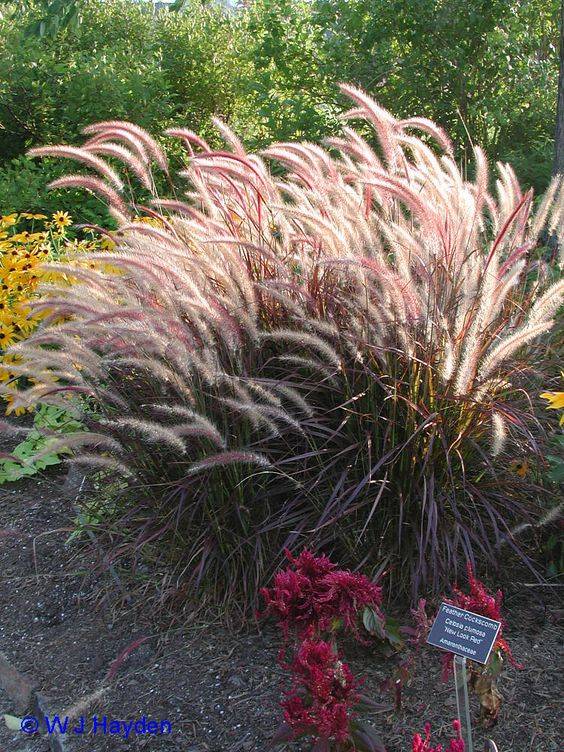
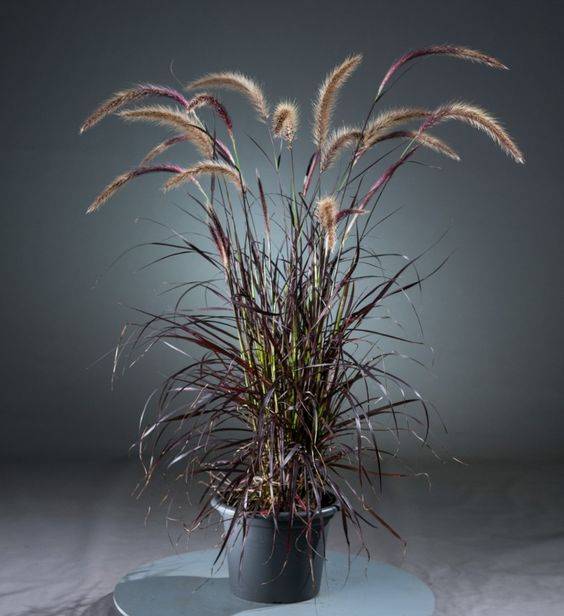
Pennisetum Rubrum
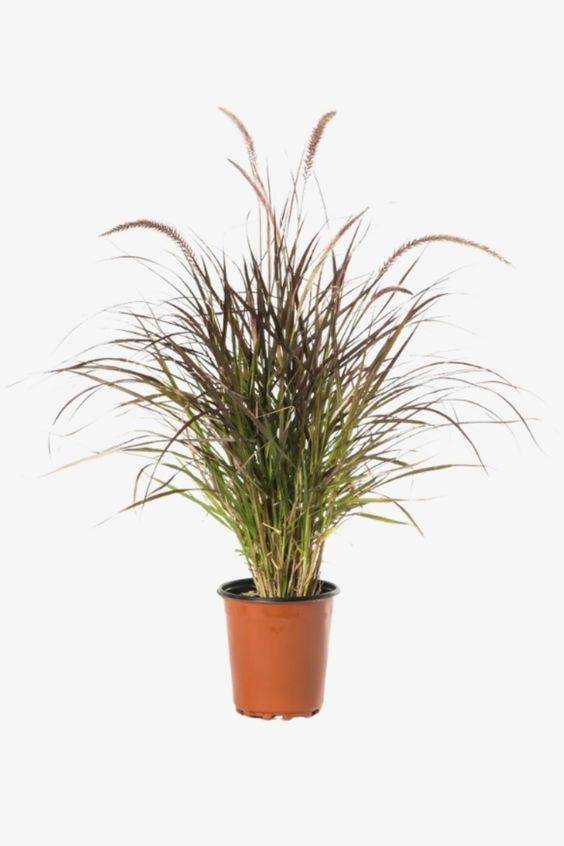
Pennisetum setaceum ‘Rubrum’, commonly known as Purple Fountain Grass, is an ornamental grass that is popular among gardeners for its striking burgundy-red foliage and soft, fuzzy-like flowers. It is a fast-growing, herbaceous perennial grass that typically grows in 3-5 ft. tall (90-150 cm) and 2-4 ft. wide (60-120 cm) rounded mounds. The plant is topped with soft, fluffy, red-burgundy flower plumes on arching stems from mid-summer until frost. The purplish flower spikes are succeeded by burgundy or purplish-tinged seed heads. Purple Fountain Grass is drought tolerant and performs best in full sun in light, moderately fertile, well-drained soils. It is versatile and can be used as a specimen plant, providing a dramatic effect in groups or en masse. It is ideal in borders, providing texture, color, and contrast, and looks impressive in containers.
Planting: Plant the grass in a sunny location with well-draining soil that is rich in organic matter. The plant is drought tolerant and does not require much watering once established.
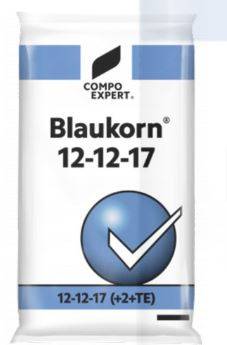
Fertilizing: You can fertilize the plant with a slow-release, balanced fertilizer in spring to help stimulate new growth.
Pruning: Prune the plant in late winter or early spring before new growth emerges. Cut back the previous year’s growth to about 6 inches above the ground.
Overwintering: In areas with cold winters, the plant is mostly grown as an annual since it is tender and rarely sets seeds. If you want to overwinter it, protect it from frost by covering it with a thick layer of mulch or moving it indoors to a cool, dry location.
Pest and Disease Control: The plant is not often bothered by pests or diseases and is generally rabbit and deer resistant.
Uses: Purple Fountain Grass is versatile and can be used as a specimen plant, providing a dramatic effect in groups or en masse. It is ideal in borders, providing texture, color, and contrast, and looks impressive in containers.
here are some step-by-step instructions for caring for Pennisetum setaceum ‘Rubrum’:
Review
Related products






Contact Info
- Address: Love gardens LLC , nursery warsan 3, Dubai
- Phone: +971 554899462
- Email: [email protected]