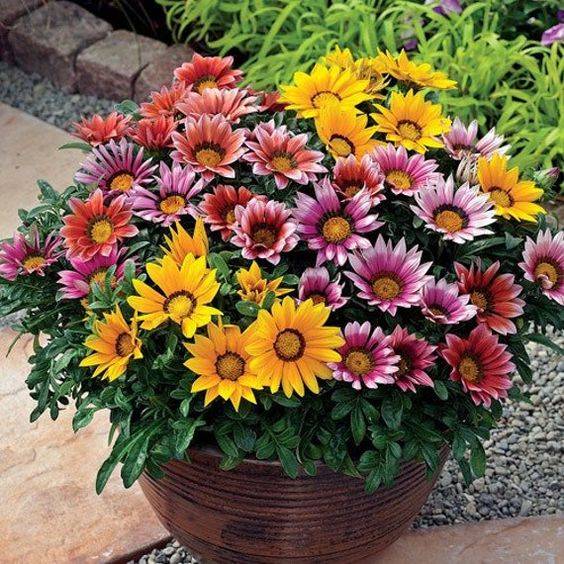
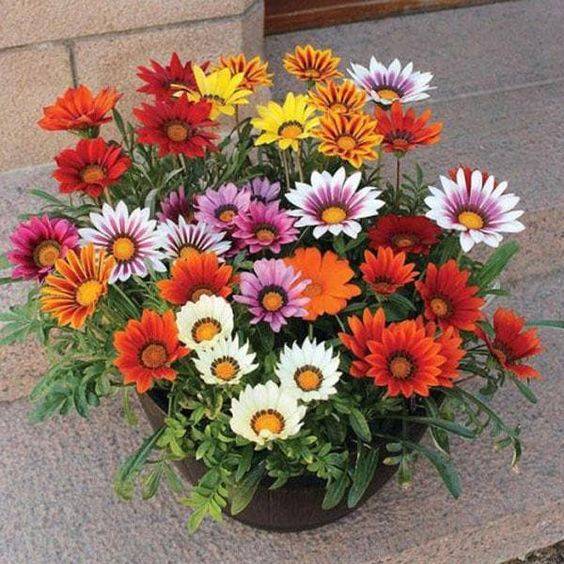
Gazania


Gazania is a warm-weather perennial with large composite flowers in vibrant shades of yellow and orange. Because of its daisy-like flowerheads, it is sometimes referred to as the African daisy, though other plants—especially those of the Osteospermum genus—also use that name. With its vibrant color spectrum, this low-maintenance flower is excellent for brightening up hard-to-landscape spaces. The plant is a prolific bloomer that attracts butterflies. Gazanias are native to South Africa and are low-growing half-hardy perennials in the aster family. They prefer full sun and well-draining soil. Gazanias do best in sandy, well-draining soil but will tolerate many soil types and conditions. Its preferred pH is neutral (near 7.0 pH) but it will also tolerate acidic soil up to 5.8 and alkaline soil. The leathery foliage of gazania plants is a clue to the high drought tolerance of this flower. Let the soil dry out between waterings. Gazania flowers thrive in full sun. Morning or afternoon shade may cause the flowers to stay closed for a portion of the day and may cause the plants to grow lanky, exceeding their normal height of six to 12 inches. Deadhead gazania flowers to extend the blooming time of the plants.
Planting: Gazanias prefer full sun and well-draining soil. Plant young gazanias about one foot apart, allowing them to spread properly. Their preference for well-drained soil makes them a natural choice for a rock garden. Plant them in mid- or late spring when the soil has warmed. They’ll bloom about 12 weeks after planting from seed. When grown in zones 9 to 11, they may perform as perennials, blooming through fall and winter and into spring. The flowers can bounce back from light frosts.
Watering: Gazanias require regular watering throughout the growing season (spring to fall). They need at least an inch or two of water every seven to ten days. If the rain doesn’t provide it, you should.
Fertilizing: To stay healthy during the months-long blooming marathon, gazanias need a dose of diluted liquid fertilizer, provided once every month or so while they’re flowering. Select a balanced product (10-10-10 NPK).
Pruning: Prune gazanias regularly to encourage bushy growth and more flowers. Deadheading spent blooms is also important to keep the plant looking tidy and to encourage more blooms.
Propagation: Gazanias can be propagated by stem cuttings taken in late summer or early fall. Trim off a healthy portion of stem that’s around 6 inches long. Opt for a green, supple stem over one that’s older and… Remove foliage from the bottom half of the stem. Dip the cut end in rooting hormone. Plant the stem in a small container filled with moistened soilless potting mix.
Here are some step-by-step instructions for taking care of gazanias:
Review
Related products
































Contact Info
- Address: Love gardens LLC , nursery warsan 3, Dubai
- Phone: +971 554899462
- Email: [email protected]